.png?width=200&height=45&name=Opsessed%20logo%20yellow%20and%20black%20(2).png)
Implementing PPM software for designLED
At a glance
-
Client: designLED, a Forvia Faurecia company
-
Sector: Lighting and HMI innovation
-
The challenge: Project tracking spread across spreadsheets and a basic task manager, with no link to the financials. By the time leadership reviewed the numbers, they were already out of date.
-
What we did: Mapped the full enquiry-to-delivery process, then built a Celoxis PPM environment around it, running the rollout and all communication with the Celoxis developers.
-
The result: One reliable source of project data, live RAG reporting that now runs the project meetings, and what-if capacity planning months ahead.
The challenge: spreadsheets and disconnected planning
designLED are a lighting and HMI innovation company based in West Lothian, Scotland. As the company grew, its internal processes couldn't keep pace, because they depended on a patchwork of isolated tools and Excel files. Tracking projects through spreadsheets meant constant version errors, and by the time the leadership team sat down to review the data, it was already out of date.
There was a basic cloud task manager in place, but it worked as a simple checklist. It couldn't talk to other departments or to the financial figures, which left the management team guessing rather than making informed business calls.
designLED had already identified Celoxis as the right portfolio project management (PPM) tool. What they needed was a partner to build their specific workflows into it.
The approach: map the process before touching the software
This was a must-win rollout for designLED, so we set a steady rhythm from day one: weekly management meetings to check the build against requirements and keep everyone in the loop.
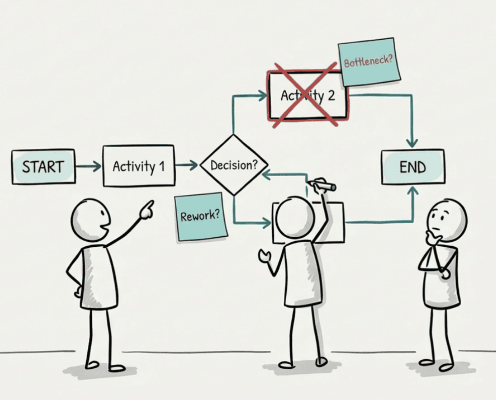
We didn't configure a single thing in Celoxis until we had mapped the entire process, from first enquiry to final delivery. designLED have their own processes, Define, Research, Ideate, Design, Prototype and Validate. It was critical we understood how they worked so we could make the software integrate seamlessly. Configuring a tool around a process you only half understand will likely mean adoption will be poor.
What we built
The finished Celoxis environment gives each person exactly the view they need:
- Engineering-focused views. Kanban boards show engineers only their active tasks, so they can stay on top of technical work without getting lost in the wider project.
- Automatic feedback loops. The interface stays simple for the people using it, and their updates feed straight through to the project manager dashboards.
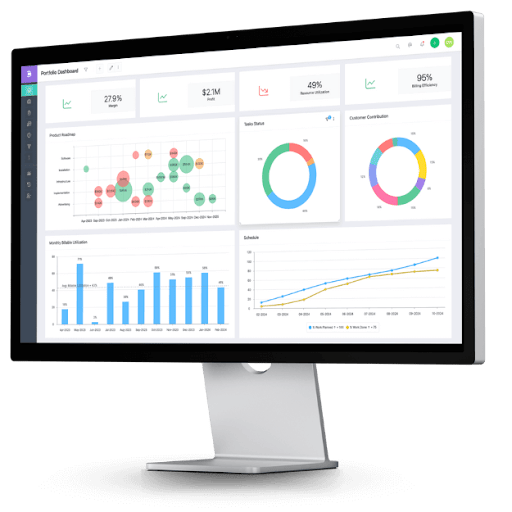
- Project oversight. Detailed Gantt charts let PMs track live progress against the original baseline, so it's obvious early if a project starts to drift.
- Live RAG reporting. A Red, Amber, Green status dashboard is now the agenda for every project meeting. No manual minute-taking, no long prep sessions before a catch-up.
- Cost and resource tracking. A purchase request system sits directly inside project tasks and links to the ERP, so actual and forecast costs are handled in one place.
- Risk and governance. Change control and risk management are part of the daily project lifecycle rather than an afterthought.
Throughout the build, Opsessed handled all communication with the Celoxis developers. That kept things moving and meant the Operations Manager didn't have to spend their days acting as a middleperson.
From day one Kristian listened to me, to the team, to our problems and our ideas. That made a huge difference in the process of successfully implementing our PPM software. There were no assumptions on his part, only suggestions and solutions.
Deploying Celoxis has fundamentally changed the way we manage our projects and the business overall, driving efficiencies across all activities. I believe this would not have been possible in the timescale we achieved without Opsessed to steer the customization and drive the analysis of our processes.”
The results: reliable data and planning with foresight
A system only works if people use it. Because this one was built around how the teams truly work, the engineering and innovation teams have adopted it properly, rather than working around it.
The biggest shift is what-if analysis. designLED can now simulate a project in the system and see how it hits department capacity months down the line. If a bottleneck appears, they can adjust a quote or manage a client's expectations before anything is committed.
Planning now happens earlier, leadership can spot hurdles and profit risks before they become problems, and the business finally has a source of data it can trust as it scales.